
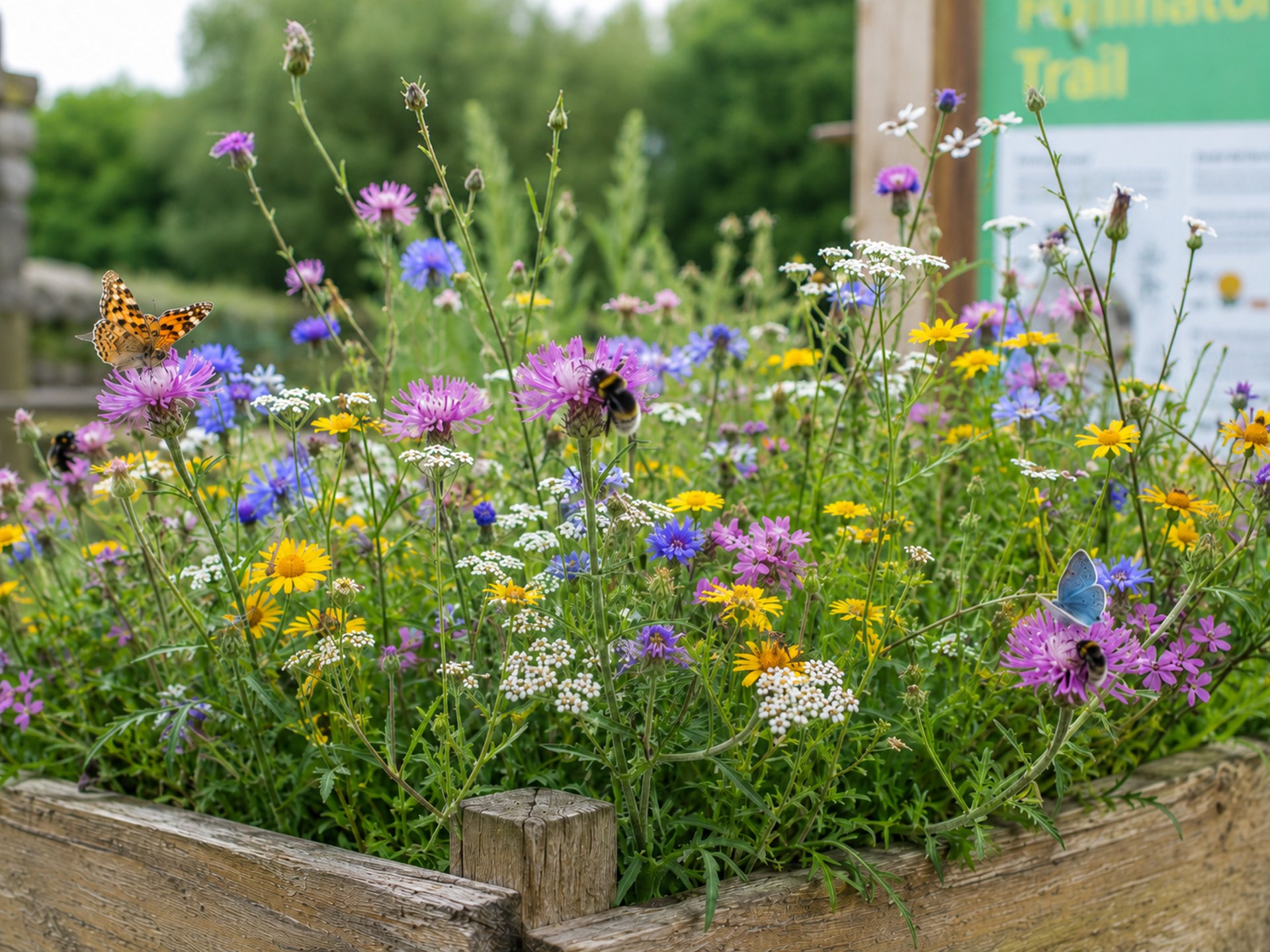
The Urban Nature Pollinator Trail
A growing network of wildflower planters, bee hotels and wildlife-friendly spaces across Stoke-on-Trent.
What is the Urban Nature Action Pollinator Trail?
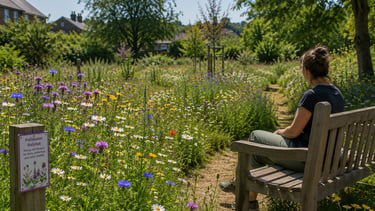
Each participating site creates a small place where bees, butterflies, hoverflies and other pollinating insects can feed, rest and shelter. Together, these individual spaces form stepping stones through the urban landscape, helping wildlife move between gardens, parks and other green areas.
Businesses, schools, community groups and other organisations can host or sponsor a pollinator space, helping the trail grow one planter at a time.
From one planter to a whole meadow, every space can become part of the trail.
What are the benefits of the Pollinator Trail?
Joining the Pollinator Trail is a practical way for your business or organisation to support local wildlife while creating a more attractive, welcoming and memorable place for customers, visitors, staff and the wider community.
Wildflower planters and pollinator-friendly spaces can brighten entrances, outdoor seating areas, courtyards, car parks and unused patches of land. They can help soften built-up surroundings, add seasonal colour and make a site feel cared for, distinctive and inviting.
Supporting the Pollinator Trail can also strengthen how people feel about your organisation. Customers are increasingly drawn to businesses that demonstrate genuine environmental and community values. A visible pollinator space shows that you are taking positive action rather than simply making promises.
This can help your organisation:
build a positive local reputation
stand out from competitors
attract environmentally conscious customers and clients
encourage repeat visits and recommendations
create engaging stories and photographs for social media
demonstrate social value and environmental responsibility
strengthen relationships with local communities
provide a more pleasant environment for staff and visitors
A well-maintained pollinator space may also increase footfall, encourage people to pause near your premises and make your location more recognisable. Where several organisations take part, the trail can create a shared sense of pride and help attract attention to the wider area.
By hosting or sponsoring a pollinator space, your organisation can support biodiversity, improve its surroundings and show customers that it is invested in a healthier, greener future.
Good for wildlife. Good for communities. Good for business.
For your Business
For Community
The Pollinator Trail can help bring colour, wildlife and a stronger sense of connection into local neighbourhoods.
Wildflower planters and pollinator-friendly areas can transform overlooked spaces, brighten streets and make community sites feel more welcoming and cared for. They provide opportunities for people to notice the wildlife living around them and to feel more connected to the places where they live, work and spend time.
The trail can also create shared projects that bring people together. Schools, residents, community groups, volunteers and local organisations can take part in planting, wildlife recording, seasonal activities and learning events.
Community benefits can include:
brighter, more attractive shared spaces
greater access to nature in built-up areas
opportunities for volunteering and local involvement
wildlife learning for children and adults
stronger links between residents, groups and organisations
increased pride in local neighbourhoods
support for wellbeing through everyday contact with nature
opportunities for citizen science and wildlife recording
practical ways for people to take positive environmental action
By connecting small planters with larger areas of wildflower land, the trail can create a visible network of hope and community care across Stoke-on-Trent and nearby areas.
When nature is given space to flourish, communities can flourish alongside it.
For Wildlife
The Pollinator Trail creates a connected network of feeding, sheltering and breeding opportunities for bees, butterflies, moths, hover-flies and other insects across urban areas.
Wildflower planters can provide valuable nectar and pollen in places where natural food sources are limited. Larger areas of land can support a greater variety of native plants, longer flowering periods and more complex habitat for wildlife.
By linking planters, gardens, verges and larger patches of wildflower habitat, the trail can help pollinators move more safely through the urban landscape. These stepping stones are especially important where roads, buildings and intensively managed spaces have broken up natural habitats.
Benefits for wildlife can include:
more sources of nectar and pollen
longer flowering seasons
greater variety of native plants
shelter from wind, heat and bad weather
places to rest, feed and reproduce
stronger connections between isolated habitats
support for bees, butterflies, moths, hoverflies and other insects
more food for birds, bats and other wildlife that depend on insects
increased biodiversity across towns and neighbourhoods
greater resilience as habitats face climate change and development
Even a small planter can make a difference. When many spaces are joined together, they can form a living route through the city and help wildlife find the resources it needs to survive.
From one flower-filled planter to a whole meadow, every habitat becomes part of something bigger.






Ways to Support the Pollinator Trail
Businesses and organisations can support the Pollinator Trail in several ways.
You didn’t come this far to stop
Sponsor Part of the Pollinator Trail
Fund a planter or habitat at a school, community centre or other suitable local location.
Sponsorship can cover the cost of planting, installation, signage and ongoing maintenance. Sponsors may also receive recognition on the Pollinator Trail webpage, map, project signage and social media updates.
Larger organisations can support several sites, a particular neighbourhood or a wider section of the trail.
This could include funding multiple planters, larger areas of wildflower planting, habitat features, educational activities, maintenance or community events.
Whether you host a space or sponsor the wider trail, your support helps create more connected habitat for pollinators across Stoke-on-Trent and nearby areas.
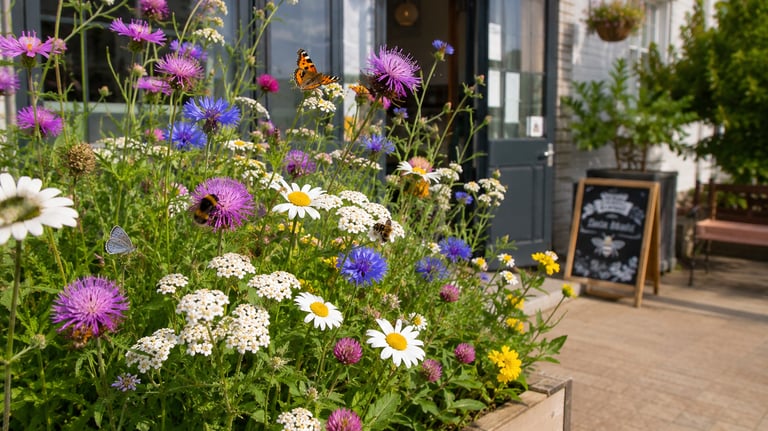
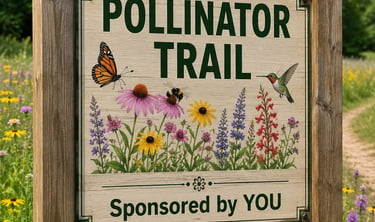
Provide a suitable location at your own premises for a wildflower planter, bee hotel or area of pollinator-friendly planting.
Urban Nature Action CIC will assess the space, create the habitat and provide an agreed level of ongoing care. Your organisation benefits from a colourful, wildlife-friendly feature without placing additional maintenance demands on staff.
Host a Managed Pollinator Space
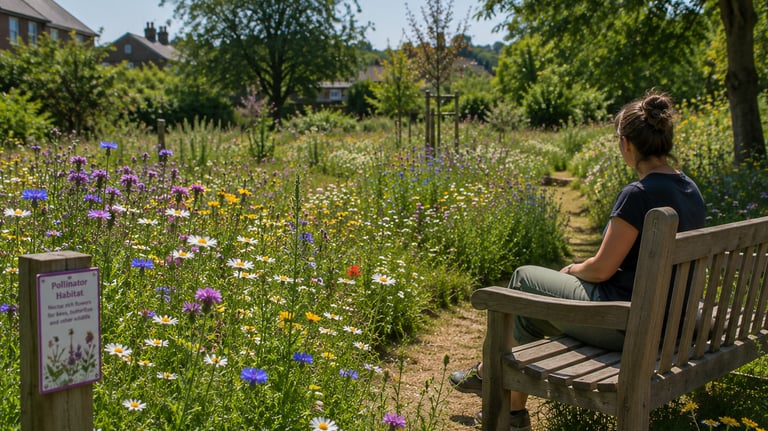
Sponsor a Community Pollinator Space
Urban Nature Action CIC
Helping people and wildlife thrive together in Stoke-on-Trent and surrounding areas.
Wander
Reach out
hello@urbannatureaction.org.uk
Stoke-on-Trent, Staffordshire
Community Interest Company No. 17313146
© 2026 Urban Nature Action CIC-A registered Community Interest Company supporting local urban biodiversity.
STOKE-ON-TRENT WILDING

